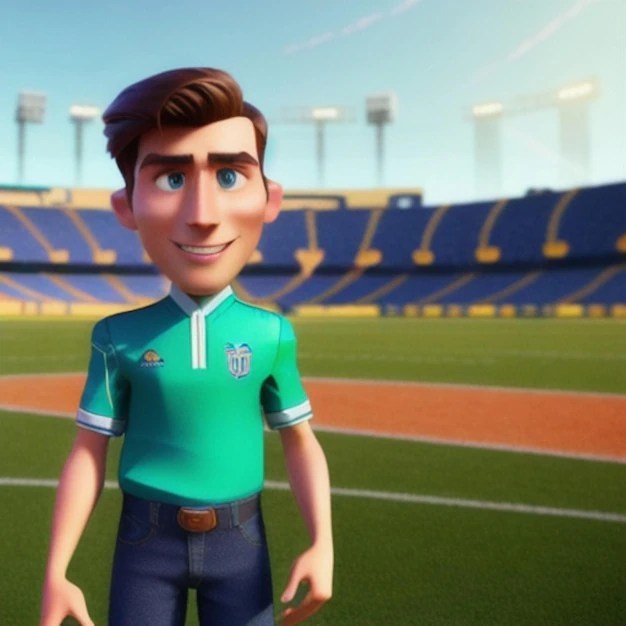
The digital canvas is constantly expanding, and with the advent of sophisticated AI character generators, you now possess unprecedented power to bring your ideal male characters to life. Forget costly photoshoots, casting calls, or endless sketching; styling and customizing AI-generated male characters offers a streamlined, budget-friendly, and incredibly versatile pathway to creating compelling visuals for everything from marketing campaigns and social media to gaming avatars and digital art. This guide will walk you through leveraging the best AI tools to achieve full creative control, ensuring your male characters are not just generic placeholders but embody the exact vision you have in mind.
At a Glance: Mastering AI Male Character Generation
- Define Your Vision: Start with a clear concept for your character's look, personality, and purpose.
- Master the Prompt: Detailed, specific text prompts are your most powerful tool for initial generation.
- Leverage AI Tools: Platforms like Recraft.ai and Pixelcut.ai offer robust features for creation and iteration.
- Customize Everything: Control ethnicity, age, build, hair, clothing, pose, expression, and environment.
- Iterate and Refine: Don't settle for the first output; use editing tools to recolor, restyle, and enhance quality.
- Ensure Consistency: Learn techniques to maintain character consistency across multiple images.
- Export for Any Platform: Generate images compatible with Instagram, Twitch, LinkedIn, gaming, and more.
The Dawn of Digital Doubles: Why AI Characters are a Game-Changer
In the past, generating a unique male character for a project meant either hiring a model, commissioning an artist, or spending hours in a 3D modeling program. Each option came with its own set of challenges—cost, time, skill requirements, and the often-elusive quest for the perfect fit. AI-generated male characters completely sidestep these traditional hurdles, offering an on-demand solution that democratizes high-quality visual content.
Whether you're a startup founder needing diverse models for a product launch, an indie game developer crafting unique NPCs, a social media influencer looking for a consistent avatar, or a designer visualizing concepts, AI tools provide instant access to an endless gallery of customizable male characters. This translates to significant savings in time and money, eliminating the need for studio rentals, photographers, stylists, or even model fees. The speed and cost-effectiveness alone make AI a compelling choice, but it's the sheer breadth of creative control that truly sets it apart.
Your Toolkit for Creation: Understanding AI Character Generators
While many AI image generators exist, some are specifically tailored for character creation and customization, offering features that go beyond basic text-to-image. Tools like Recraft.ai and Pixelcut.ai stand out by providing comprehensive control over the entire character design process.
Recraft.ai excels at producing a wide range of consistent AI characters—from lifelike humans and imaginative creatures to distinct cartoons and fantastical beings. It's built for professional designers, illustrators, and marketers, allowing them to not only generate original images but also iterate on them endlessly, even incorporating uploaded brand styles for seamless integration.
Pixelcut.ai, with its AI Male Model Generator, focuses specifically on creating unique images of male models from detailed text descriptions. It's perfect for marketing campaigns, e-commerce stores, social media content, and product visualization, granting users full creative control over minute details without needing a single photoshoot.
Both platforms share a core philosophy: your imagination, channeled through a detailed text prompt, is the primary input. The AI then acts as your personal artist, translating your words into visuals.
The Art of the Prompt: Your Creative Command Center
The text prompt is the heart of styling and customizing AI-generated male characters. Think of it as giving precise instructions to an incredibly talented, yet literal, artist. The more descriptive you are, the closer the AI will get to your vision. Generic prompts yield generic results; specific prompts unlock unparalleled customization.
Crafting an Effective Prompt: What to Include
When describing your desired male character, consider these key attributes:
- Core Identity:
- Age: Young, middle-aged, elderly, teen (e.g., "a young man," "a 40-year-old businessman"). You can even specify for a handsome black teen AI-generated model.
- Ethnicity/Race: Asian, Caucasian, Black, Hispanic, Middle Eastern, etc. (e.g., "an African American man," "a Japanese samurai").
- Build/Physique: Muscular, slim, athletic, average, heavyset (e.g., "a lean runner," "a stocky lumberjack").
- Expression: Happy, serious, thoughtful, angry, confident, smiling, neutral (e.g., "with a confident smirk," "looking pensive").
- Physical Details:
- Hairstyle & Color: Short, long, curly, straight, messy, slicked back, blonde, black, brown, red, gray (e.g., "with short, spiky brown hair," "a man with long, flowing silver hair").
- Facial Hair: Clean-shaven, stubble, beard, mustache (e.g., "a man with a neatly trimmed beard," "clean-shaven").
- Eye Color: Blue, brown, green, hazel.
- Distinguishing Features: Scars, tattoos, glasses, specific moles (e.g., "wearing stylish round glasses," "with a subtle scar over his left eye").
- Clothing & Accessories:
- Style: Casual, formal, streetwear, futuristic, fantasy, vintage (e.g., "wearing a vintage leather jacket," "dressed in a modern techwear outfit").
- Specific Items: T-shirt, suit, hoodie, jeans, armor, uniform, hat, watch, jewelry (e.g., "a tailored navy suit," "a black graphic tee and distressed jeans").
- Color/Pattern: Specify colors and patterns (e.g., "a red plaid shirt," "a dark blue hoodie with a subtle pattern").
- Pose & Action:
- Body Position: Standing, sitting, walking, running, leaning, hands in pockets, arms crossed (e.g., "standing confidently with arms crossed," "sitting at a cafe table").
- Interaction: Holding an object, talking on the phone, looking at something specific (e.g., "holding a steaming cup of coffee," "typing on a laptop").
- Environment & Background:
- Location: City street, nature, studio, office, abstract, futuristic (e.g., "on a bustling city street," "against a minimalist white background").
- Lighting: Soft, dramatic, natural, neon (e.g., "lit by warm, golden hour sunlight," "under harsh fluorescent lights").
- Time of Day/Atmosphere: Day, night, sunset, rainy, moody (e.g., "a sunny afternoon in a park," "a dimly lit bar at night").
- Art Style/Aesthetic:
- Realism: Photorealistic, hyperrealistic.
- Stylized: Cartoon, anime, comic book, oil painting, watercolor, 3D render (e.g., "in the style of a Pixar character," "a realistic photo, studio quality").
Example of a Highly Detailed Prompt:
"A 30-year-old East Asian man with a lean, athletic build, short dark hair styled casually, and a friendly, open smile. He's wearing a forest green techwear jacket over a light gray t-shirt, dark cargo pants, and futuristic sneakers. He's standing casually, leaning against a graffiti-covered brick wall on a bustling city street at dusk, illuminated by the warm glow of streetlights. Photorealistic, high detail, cinematic lighting."
Notice how each element contributes to a vivid mental picture, guiding the AI toward a precise output.
Step-by-Step Character Creation: From Idea to Image
Let's walk through the general process of creating and customizing an AI-generated male character, drawing on the capabilities of tools like Recraft.ai and Pixelcut.ai.
Step 1: Conceptualize Your Character & Select a Style
Before you even type a word, envision your character. What's his purpose? Who is he? This clarity will fuel your prompts. Once you have a concept, you'll need to choose an initial style.
- Recraft.ai: Offers a library of pre-made styles (e.g., photorealistic, illustration, vector, 3D graphics) or allows you to create your own style from a reference image. This is incredibly powerful for maintaining a consistent aesthetic.
- Pixelcut.ai: Primarily focuses on generating realistic male models but can still create stylized characters based on your prompt's descriptive language (e.g., "in a comic book style").
Pro Tip: If you have a specific brand aesthetic or character design in mind, Recraft's ability to create a custom style from a reference image is a game-changer for consistency.
Step 2: Enter Your Detailed Text Prompt
This is where your vision truly takes shape. Input the detailed prompt you've meticulously crafted, including all the attributes discussed above (age, ethnicity, clothing, pose, environment, style, etc.). Remember, more descriptive prompts lead to more accurate final images.
Step 3: Generate the Character & Review Initial Output
Click the "Generate" or "Recraft" button and let the AI do its work. Within moments, you'll receive your first batch of AI-generated characters.
- Initial Review: Look at the generated images. Do they capture the essence of your prompt? Are there any unexpected elements? Often, the first generation provides a good starting point, but rarely a perfect finish.
- Identify Areas for Improvement: Pinpoint what works and what doesn't. Maybe the clothing isn't quite right, or the expression needs tweaking. This critical eye sets the stage for refinement.
Step 4: Refine and Edit for Creative Control
This is where the "customizing" truly shines. Modern AI tools are not just about generation; they're about iteration.
- Edit Details: Most platforms allow you to edit specific aspects. If a color is off, or an accessory isn't right, you can often target and adjust these elements directly.
- Recolor & Restyle:
- Recraft.ai: Offers explicit options to recolor your character, change the overall style, and enhance quality. You can adjust the color palette of the entire image or specific elements.
- Enhance Quality: If the resolution or detail isn't quite there, tools often have an "enhance" or "upscale" feature to sharpen the image.
- Adjust Background: Many tools let you easily modify or swap out the background, placing your character in different contexts without regenerating the entire image.
- Iterate with New Prompts: If major changes are needed, you can modify your initial prompt and generate again, perhaps focusing on the specific areas that need adjustment. For example, if the pose is off, try "Generate again, but this time, have him looking directly at the camera."
Step 5: Generate Variations for Consistency and Choice
Once you have a character you're happy with, you'll often need more than one image. This is crucial for things like social media content, sequential storytelling, or creating a series of ads.
- Variate Feature:
- Recraft.ai: Explicitly offers a "Variate" option. This is incredibly valuable for generating multiple versions of your character that maintain consistency in appearance (face, body, style) but with different poses, expressions, or minor clothing variations. This is key to building a cohesive visual narrative.
- Prompt-based Variations: Even without a dedicated "variate" button, you can achieve variations by slightly altering your prompt while keeping core elements consistent. For example, "A young man [as described above], now walking away, looking over his shoulder."
Step 6: Choose Dimensions and Export
The final step is to prepare your character for use.
- Select Dimensions: Choose the appropriate image size for your platform (e.g., square for Instagram, wide for banners, specific dimensions for Twitch avatars).
- Export File Type: Export your images in common formats like JPG or PNG. Most AI-generated avatars and models are compatible with platforms like Instagram, Twitch, LinkedIn, Discord, and YouTube, but always confirm the required file types and sizes for your specific destination. Recraft avatars, for instance, are widely compatible.
Advanced Customization & Best Practices
Beyond the basic steps, these tips will help you unlock deeper creative control and avoid common pitfalls.
Maintaining Character Consistency Across Images
One of the biggest challenges with AI generation is consistency. How do you get the same character in different scenarios?
- Use a Seed/Reference Image: If your AI tool allows it (Recraft does, through its "custom style from reference images"), upload an initial character image as a seed for subsequent generations. This helps the AI reference the specific visual DNA of your character.
- Highly Specific Prompts: When generating variations, keep the core identity elements (age, ethnicity, facial features, distinctive clothing items) exactly the same in your prompt. Only change the pose, action, or environment.
- Iterate from Existing Output: Instead of starting from scratch, edit or "variate" directly from an image you like. This tells the AI, "Keep this guy, just change X."
Harnessing AI for Diverse Character Representation
AI tools like Pixelcut's AI Male Model Generator excel at creating diverse models. This is crucial for inclusive marketing and content.
- Specify Ethnicity & Age: Don't shy away from being specific. "An elderly African American man with a warm smile," or "a South Asian man in his late 20s" will yield far more accurate results than generic terms.
- Explore Different Body Types: Move beyond the stereotypical "model" physique. Describe "a man with an average build," "a stocky construction worker," or "a slim, artistic type."
- Avoid Stereotypes: While being specific, be mindful of reinforcing harmful stereotypes. Focus on positive, empowering descriptions rather than those tied to negative tropes.
Incorporating Brand Styles and Aesthetics
For marketers and professional designers, integrating brand aesthetics is paramount.
- Recraft's Custom Styles: Recraft allows users to upload their own brand styles or reference images to create custom styles. This ensures generated characters automatically align with your brand's visual identity, be it flat vector art, a specific illustration style, or photorealistic renderings with a particular color grade.
- Color Palette Control: Utilize features that allow you to adjust the color palette of your generated images to match brand guidelines. This applies to clothing, backgrounds, and even overall image tone.
Common Pitfalls and How to Avoid Them
- Vague Prompts: "A man." This will give you a random, uninteresting output. Solution: Be as detailed as possible, using the prompt guide above.
- Unnatural Anatomy/Features: AI can sometimes produce strange hands, mismatched eyes, or distorted limbs. Solution: Generate multiple variations and pick the best. For critical projects, minor touch-ups in an image editor might be necessary. Some tools are getting better at this.
- Lack of Consistency: Generating multiple images of the "same" character that look completely different. Solution: Use seed images, specific prompts, and the "variate" feature where available.
- Over-reliance on Defaults: Sticking to the AI's default settings or styles might lead to generic outputs. Solution: Experiment with custom styles, unique prompt modifiers, and explore the full range of editing options.
- Not Iterating Enough: Stopping at the first satisfactory output. Solution: Treat AI generation as a sculpting process. Generate, refine, variate, and enhance until it's perfect.
Beyond Static Images: The Future of AI Characters
The current landscape of AI character generation is impressive, but it's just the beginning. We're already seeing advancements that move beyond static images:
- AI-Generated Video & Animation: The ability to generate consistent characters who can perform actions or speak in short video clips is rapidly developing.
- 3D Model Generation: Creating customizable 3D models from text prompts or 2D images, ready for game engines or virtual reality experiences.
- Emotion & Personality Transfer: AI that can infer and apply specific personality traits or emotional states more dynamically.
For now, by mastering the art of the prompt and leveraging the powerful customization features of tools like Recraft.ai and Pixelcut.ai, you are well-equipped to create virtually any male character you can imagine, with full creative control over every pixel.
Your Next Steps in AI Character Creation
Armed with this knowledge, your journey into styling and customizing AI-generated male characters should feel less daunting and more exciting.
- Experiment Freely: The best way to learn is by doing. Start with a clear concept for a male character you need, then head over to a platform like Recraft.ai or Pixelcut.ai.
- Prompt, Refine, Repeat: Don't be afraid to iterate. Generate, see what works, tweak your prompt, and generate again. Every revision brings you closer to your ideal character.
- Build a Character Library: As you create characters, save your favorite prompts and the generated images. This will serve as a valuable resource for future projects and help maintain consistency.
- Stay Updated: The world of AI is moving at lightning speed. Keep an eye on new features, tools, and best practices to continually enhance your character generation skills.
The power to create, customize, and control your visual narrative is now truly in your hands. Go forth and populate your digital worlds with the male characters of your wildest imagination.