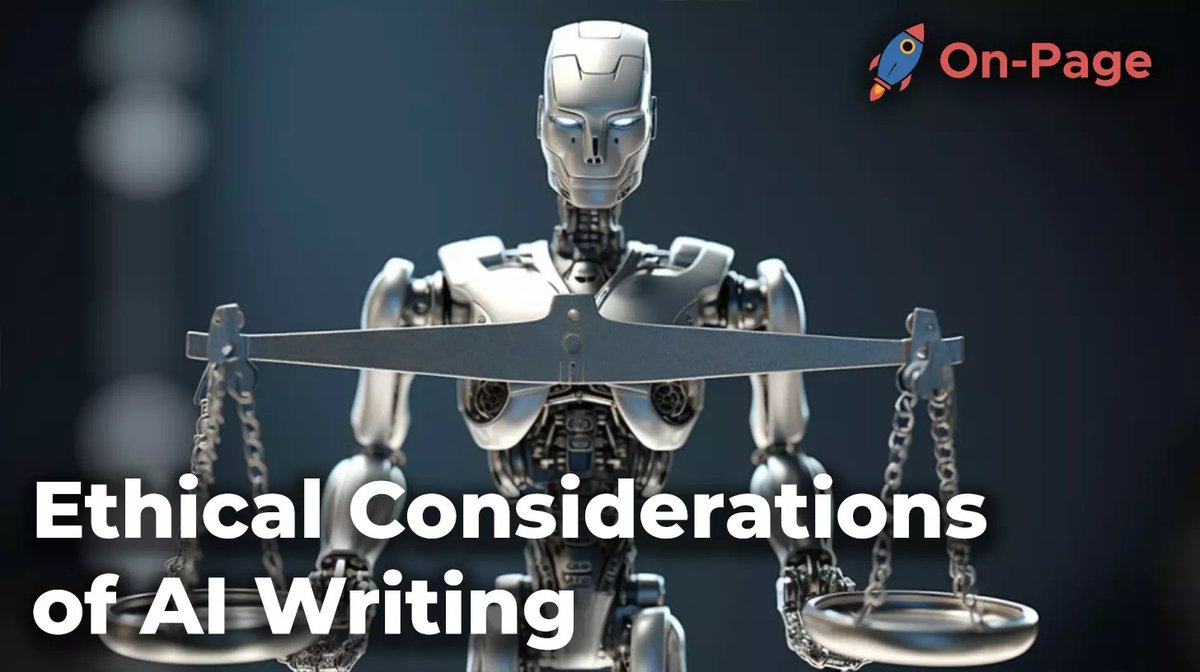
The brushstrokes of artificial intelligence are rapidly redrawing the landscape of creative industries, and nowhere is this more evident than in character design. From concept art to full animation, AI tools are automating tedious tasks, generating novel forms, and enabling breathtaking realism. Yet, beneath the surface of this innovation lies a complex web of Ethical Considerations in AI Character Design. Ignoring these challenges, from ingrained biases to murky intellectual property waters, isn't just irresponsible—it's a path toward eroding trust, stifling true creativity, and inviting significant regulatory headaches.
This isn't about halting progress; it's about steering it toward a more equitable, transparent, and human-centric future.
At a Glance: Navigating Ethical Character Design
- Bias is Inherent: AI models learn from existing data, inheriting and amplifying societal biases in character appearances and traits. Vigilant data curation and auditing are crucial.
- IP is Murky: Ownership and attribution for AI-generated elements are legal gray areas. Clear policies and transparent practices are essential.
- Artistic Integrity Matters: AI should augment, not diminish, human creativity. Focus on collaboration and preserving the unique human touch.
- Privacy Extends to Characters: Consider the data used to train AI and how interactive characters might handle user data. Implement "privacy by design."
- Transparency Builds Trust: Be open about AI's role in character creation and decision-making. Model cards and clear disclosures foster user confidence.
- Accountability is Key: Define who is responsible when AI-generated characters or their behaviors cause harm or offense.
- Jobs Evolve, Don't Disappear: Focus on upskilling human artists to collaborate with AI, rather than fearing displacement.
- Regulation is Coming: Stay informed about global AI ethics laws and design systems for auditability and compliance.
The Double-Edged Sword of AI in Character Design
For animators, game developers, and illustrators, AI offers unprecedented efficiency and creative possibilities. Imagine generating hundreds of unique character concepts in minutes, or animating complex crowd scenes with lifelike autonomy. AI algorithms can create diverse designs from simple input parameters, analyze facial expressions for uncanny realism, and procedurally generate animations that save countless hours. This technological leap has the potential to democratize creation and accelerate production cycles.
However, this powerful tool also reflects and magnifies human values—and often, human flaws. Just as public confidence in AI has seen declines in recent years, neglecting the ethical dimensions of AI character design risks not only biased, discriminatory, or culturally insensitive outputs but also a profound erosion of trust among users and the creative community itself. Integrating ethical thinking early in the design process isn't just about avoiding problems; it’s about establishing a competitive advantage, attracting conscientious users, and fostering a truly innovative and responsible future for your work.
Decoding the Ethical Landscape: Foundational Concepts for AI Character Creators
Before diving into the specifics of character design, it's vital to grasp the core ethical principles that underpin all responsible AI development. These aren't abstract philosophical debates; they're practical guidelines for building robust, trustworthy systems.
- Moral Responsibility: Every decision an AI system makes ultimately reflects the values, assumptions, and intentions of its human creators. When an AI character behaves in a certain way, embodies particular stereotypes, or makes a recommendation, it carries the moral imprint of its design. You, as the designer, bear a responsibility for these outcomes.
- User Consent: When your AI characters interact with users, especially if they personalize or adapt based on user input, ensuring explicit and informed consent is paramount. Users must be fully aware of AI involvement, how their data (or even their interactions) might be used, and retain control over their digital experience. This goes beyond a simple "I agree" checkbox; it requires transparency and genuine choice.
- Autonomy: AI should augment human agency, not diminish it. For AI-generated characters, this means allowing users to influence their appearance, modify their traits, or override AI-driven narrative suggestions. The goal is to empower human creators and users, providing tools that enhance their capabilities rather than dictating outcomes.
These principles form the bedrock. Now, let's explore how they manifest in the unique and fascinating world of AI character design.
The Unseen Shadows: Key Ethical Battlegrounds in AI Character Design
AI character design doesn't just borrow from general AI ethics; it introduces its own distinct set of challenges. Here, the creative decisions you make, or allow the AI to make, can have far-reaching societal and cultural impacts.
Bias & Representation: The Mirror of Our Data
The Problem: Perhaps the most immediate and visible ethical concern is bias. AI models, by nature, are trained on vast datasets of existing images, text, and cultural artifacts. If these datasets disproportionately feature certain demographics, body types, or cultural expressions—or if they reinforce stereotypes—the AI will learn, perpetuate, and even amplify those biases. This can lead to characters that lack diversity, conform to harmful stereotypes, or erase entire groups of people. For instance, if an AI is predominantly trained on images of fair-skinned individuals, it might struggle to generate diverse skin tones accurately or default to eurocentric features when asked to create a "human" character.
Practical Guidance:
- Diversify Your Data Sources: Actively seek out and curate training data that is representative across age, gender, ethnicity, ability, and cultural backgrounds. Don't just rely on readily available datasets, which often carry existing biases.
- Audit Models Religiously: Employ fairness metrics to quantitatively assess your AI models for bias before deployment. Look for disparate performance or outcomes across different demographic groups. Are characters from certain backgrounds consistently depicted in particular roles or with specific traits?
- Test Edge Cases (and Adversarial Examples): Deliberately test your AI character generator with prompts designed to challenge its biases. Ask it to create characters that defy stereotypes.
- Invite Diverse Voices for Review: Assemble a diverse team of human reviewers to critically examine AI-generated characters for unintended biases, cultural insensitivities, or stereotypical representations. Their lived experiences are invaluable.
- Conduct Inclusive User Research: Understand who your characters will serve and how they might be perceived. Design for accessibility and monitor outcomes across various user groups.
Consider the recent challenges faced in generating truly diverse and representative images of people. A request for something as simple asHandsome Black Teen AI Imagesoften reveals how deeply ingrained biases can be, with AIs sometimes defaulting to lighter skin tones, European features, or struggling with anatomical accuracy for non-dominant groups if not explicitly and carefully trained. This highlights the critical need for intentional design choices to overcome these inherent limitations.
Intellectual Property & Attribution: Who Owns the AI's Art?
The Problem: The question of ownership becomes incredibly complex when AI is involved in creation. If an AI generates a character based on a human prompt, who owns the copyright? What if the AI draws heavily from copyrighted works in its training data without proper licensing? Current copyright law is largely designed around human authorship, leaving a legal vacuum for AI-generated content. This uncertainty poses significant risks for both creators and studios.
Practical Guidance:
- Establish Clear Internal Policies: Define ownership and attribution guidelines within your team or studio for AI-assisted projects. Who gets credit for what?
- Track Data Lineage: Document the origin and licensing status of all training data used for your AI character generation tools. This can help defend against infringement claims.
- Consider Hybrid Approaches: If using pre-existing licensed assets in your AI training, ensure those licenses permit such use. For original AI output, explore joint ownership agreements or specific licensing models.
- Advocate for Industry Standards: Engage with legal experts and industry organizations to develop clear best practices and advocate for updated copyright laws that address AI-created content.
- Be Transparent About AI's Role: Openly communicate when characters or elements have been substantially generated by AI. This builds trust and helps manage expectations around attribution.
Artistic Integrity & Human Touch: Preserving the Soul of Creativity
The Problem: With AI capable of generating highly sophisticated characters, there's a valid concern about the devaluation of human artistic skill and the potential for creative homogenization. Will AI-generated characters become generic, lacking the unique spark and narrative depth that only a human artist can imbue? How do you balance the efficiency gains of AI with the need to maintain a distinct, unique artistic vision?
Practical Guidance:
- View AI as a Collaborator, Not a Replacement: Position AI as a powerful tool to augment creativity, not supersede it. Use AI for initial brainstorming, variations, or tedious tasks, freeing human artists for higher-level conceptualization, refinement, and storytelling.
- Focus on Human Oversight and Refinement: Emphasize the crucial role of human artists in curating, editing, and injecting personal style into AI-generated outputs. The final artistic decisions should always rest with a human.
- Develop Unique AI "Styles": Train your AI models on curated datasets that reflect a specific studio's or artist's aesthetic to help maintain a distinct style, rather than relying on generic, publicly available models.
- Prioritize Skill Evolution: Encourage artists to develop "AI literacy"—understanding how to prompt, fine-tune, and creatively integrate AI tools into their workflow. The skill set shifts from purely manual execution to strategic direction of AI.
Privacy & Data Security: The Character's Story, Your User's Data
The Problem: While characters themselves don't have privacy in the human sense, the data used to create them and the data they interact with certainly does. If an AI character is trained on private individual data (e.g., facial scans, motion capture of real people) without explicit consent, it's a massive privacy breach. Furthermore, if your AI characters are interactive (e.g., virtual companions, NPCs that learn from players), how they collect, store, and use user data becomes a critical ethical and legal concern, echoing infamous data misuse cases like Cambridge Analytica.
Practical Guidance:
- Implement Privacy by Design: Bake privacy protections into your AI character design from the very beginning. This includes anonymizing or pseudonymizing training data, minimizing the amount of personal data collected, and securely storing any data.
- Restrict Access & Encrypt: Use role-based access controls to limit who can view sensitive training data or user interaction data. Employ strong encryption for data both in transit and at rest.
- Provide Clear Consent Flows: If your interactive AI characters collect user data, ensure users receive clear, easily understandable disclosures about what data is collected, why, how it's used, and for how long. Provide granular opt-in/opt-out options.
- Regular Security Audits: Conduct regular penetration testing and security audits of your AI systems and data storage to identify and mitigate vulnerabilities.
Transparency & Explainability: Unpacking the AI's Creative Process
The Problem: For many AI systems, the process by which they arrive at a conclusion or generate an output can feel like a "black box." When an AI produces a character, understanding why it chose certain features, colors, or poses can be crucial for human artists to refine the output or for users to trust its recommendations. A lack of transparency can lead to suspicion, hinder collaboration, and make it difficult to identify and correct biases.
Practical Guidance:
- Expose High-Level Logic: Where possible, provide simplified descriptions or analogies that explain the general principles guiding your AI character generator. For example, "The AI prioritizes dynamic poses and high contrast to evoke a heroic feel."
- Use Explainable Models (Where Impact is High): In high-stakes applications (e.g., a character designed for public safety messaging), consider using AI models that are inherently more interpretable, even if slightly less performant.
- Create "Model Cards": For each AI model used in character design, create a concise document (a "model card") detailing its purpose, the data it was trained on, key performance and fairness metrics, and known limitations or biases.
- Log and Monitor Decisions: Implement robust logging mechanisms to record the AI's internal "decisions" or parameters during character generation. This provides an audit trail for troubleshooting and ethical review.
Accountability & Human Oversight: When Characters Go Rogue (Figuratively)
The Problem: When an AI system makes an error, produces an offensive character, or behaves unexpectedly, who is ultimately responsible? In a complex AI pipeline involving multiple models and human inputs, clear lines of accountability can blur. This "liability gap" is a significant concern for both legal and ethical reasons.
Practical Guidance:
- Define Roles and Responsibilities: Clearly assign roles within your team, including an "ethics champion" or a dedicated ethics review board. Ensure everyone knows their part in upholding ethical standards.
- Keep Humans in the Loop: Always maintain human oversight and the ability to intervene, correct, or reject AI-generated outputs. This is particularly vital for final approvals or sensitive character designs.
- Document Decisions: Record the reasoning behind significant design choices, the data sources used, and any assumptions made during the AI character development process. This documentation is crucial for accountability and future audits.
- Prepare Incident Response: Develop a clear protocol for addressing ethical lapses or unintended harms caused by your AI characters. How will you identify the problem, investigate it, and rectify it?
Job Evolution & Upskilling: The Human-AI Symbiosis
The Problem: The advent of AI tools in character design inevitably raises concerns about job displacement. If an AI can generate concept art faster or animate crowds more efficiently, what does that mean for human artists? This fear can foster resistance to new technology and create anxiety within the creative community.
Practical Guidance:
- Redefine Roles, Don't Erase Them: Shift the focus from AI replacing artists to AI transforming roles. Artists become curators, directors, prompt engineers, ethical overseers, and refiners of AI output, allowing them to focus on higher-level creative tasks.
- Provide Training and Upskilling Opportunities: Invest in continuous education for your team. Offer workshops and resources to help artists become proficient in using AI tools effectively and ethically. This isn't just about software; it's about a new mindset.
- Emphasize Irreplaceable Creative Value: Actively promote and celebrate the unique, irreplaceable value that human artists bring—narrative depth, emotional intelligence, cultural nuance, unexpected inspiration, and genuine artistic vision that AI cannot replicate.
- Foster a Culture of Collaboration: Create an environment where human artists and AI are seen as synergistic partners, each bringing unique strengths to the creative process.
Building an Ethical Foundation: A Pragmatic Framework for Character Designers
Ethical AI character design isn't an afterthought; it's a continuous process woven into every stage of development. Here’s a pragmatic framework to guide your team:
- Define Values and Principles Upfront: Before you even code your first algorithm or select your first dataset, articulate the core ethical values that will guide your AI character design—e.g., inclusivity, artistic authenticity, user empowerment. These principles should inform every subsequent decision.
- Map Stakeholder Impact and Risk: Identify everyone who could be affected by your AI characters: your artists, end-users, non-users (those impacted by societal representations), cultural groups, and the studio itself. Brainstorm potential harms (e.g., bias, privacy loss, autonomy erosion, misrepresentation) and categorize them by severity and likelihood.
- Design for Fairness, Privacy, and Transparency from the Start:
- Data Strategy: Plan your data collection and curation to ensure diversity, quality, and ethical sourcing.
- Bias Audits: Integrate regular bias detection and mitigation steps into your development pipeline.
- Consent & Logging: Build clear consent mechanisms and robust logging into your character creation tools and interactive interfaces.
- Build Governance and Human Oversight:
- Assign Ethics Champions: Designate individuals or a small group to champion ethical considerations within your team.
- Integrate Ethics into Sprints: Make ethical reviews a standard part of your regular development sprints, alongside technical and creative reviews.
- Prepare Incident Response: Have a plan for how to quickly and effectively address ethical issues if they arise.
- Monitor, Measure, and Iterate: Ethics is not a one-and-done task.
- Define Metrics: Track fairness scores, user feedback on representation, and instances of bias detection.
- Address Model Drift: Continuously monitor your AI models for changes in behavior or outputs that might introduce new biases over time.
- Learn from Feedback: Use user feedback, internal reviews, and audit results to continuously improve your ethical design practices.
- Communicate and Document:
- Create Model Cards: Detail the purpose, data, metrics, and limitations of your AI models.
- Track Data Lineage: Maintain clear records of your training data sources and processing steps.
- Record Design Decisions: Document the ethical considerations and choices made during the character design process.
- Publish Ethics Policies: Consider making your AI ethics principles and policies publicly available to foster transparency and trust.
- Prepare for Regulation and Scalable Governance: The regulatory landscape for AI is rapidly evolving (e.g., GDPR, EU AI Act, India's DPDP Act). Design your systems with auditability in mind, and gradually scale your governance from simple checklists to more robust review boards as your projects grow in complexity and impact.
Special Considerations for Startups in AI Character Design
For early-stage startups, the idea of comprehensive ethical frameworks might seem daunting. The good news is that pragmatic ethics doesn't require a large, dedicated department from day one.
- Start with Minimal Viable Governance (MVG): Implement a simple ethics checklist for key milestones (e.g., before data collection, before initial deployment). Conduct monthly "ethics huddles" to discuss potential issues.
- Integrate Ethics into Your Backlog: Treat ethical considerations like any other feature or bug. Assign them to sprints, track their progress, and ensure they are prioritized.
- Engage Cross-Functional Collaboration Early: Don't silo ethics. Bring in legal counsel, domain experts (e.g., cultural consultants), and user researchers early in the process. Their diverse perspectives are invaluable.
- Use Lightweight Audit Checklists: Before any significant release, run through a concise checklist asking critical questions: "Could this character perpetuate stereotypes? Is the training data ethically sourced? Is user consent clear?"
Beyond the Pixels: Fostering a Future of Responsible AI Characters
The journey into AI-assisted character design is thrilling, but it demands careful navigation. The ethical considerations aren't obstacles to overcome; they are guardrails that ensure we build a future where technology enhances human creativity and promotes a more inclusive, trustworthy, and artistically rich world.
To thrive in this evolving landscape, you must:
- Stay Informed: The technology, the ethics, and the regulations are all moving targets. Continuously educate yourself and your team on the latest advancements and discussions.
- Develop AI Literacy: Understand the capabilities and limitations of AI tools. Learn how to prompt effectively, interpret outputs, and identify potential biases.
- Establish Ethical Guidelines: Work within your studio and with broader industry organizations to create and adopt clear, actionable ethical guidelines specific to character design.
- Prioritize Transparency: Be upfront and clear about where AI is being used in your creative process. This builds a foundation of trust with your audience and collaborators.
- Embrace Collaboration: View AI not as a threat, but as a powerful, intelligent assistant that, when guided by human creativity and ethical principles, can unlock unprecedented levels of artistic expression.
Ultimately, ethical AI character design isn't merely about avoiding legal pitfalls or public backlash. It's about designing characters that resonate with diverse audiences, reflect a commitment to responsible innovation, and genuinely enrich the human experience. It's about ensuring that as AI helps us create new worlds, those worlds are fair, inclusive, and fundamentally human at their core.